
Crimson Moon combat
Souls-weight melee, executions, and the Angel that finishes a room.
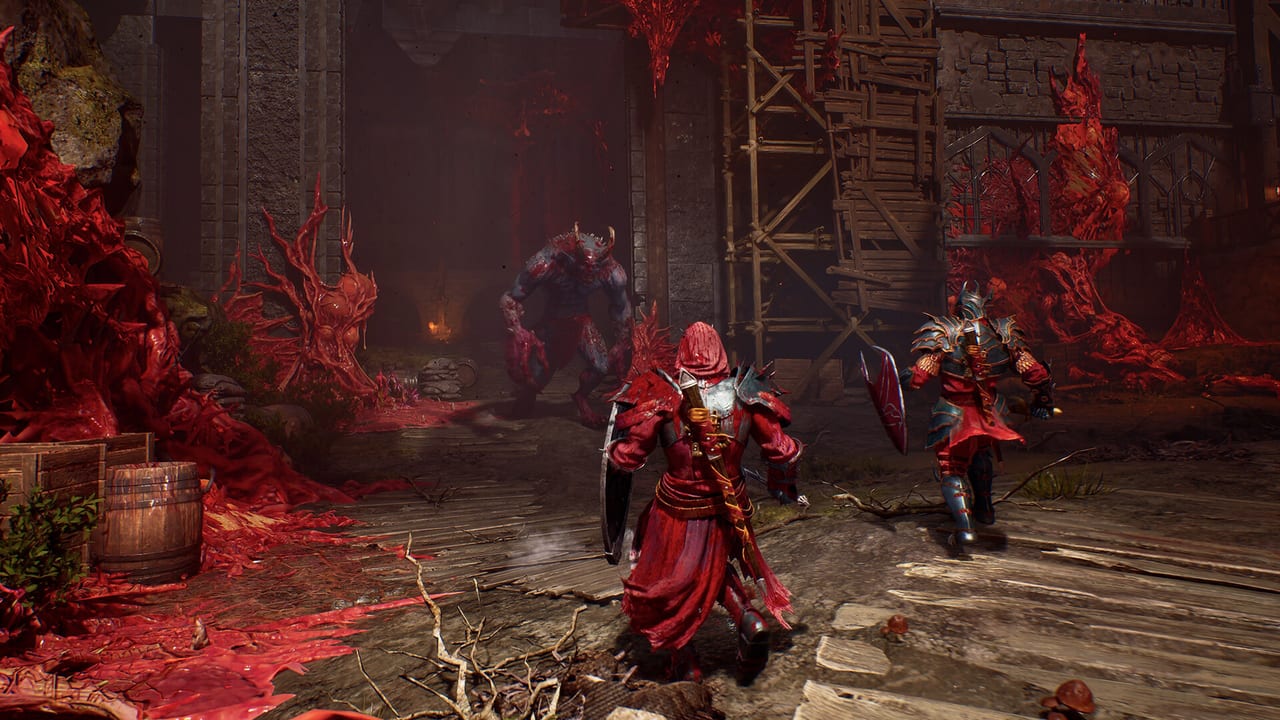
Crimson Moon’s combat is the reason most trailers look like a metal album. You fight in third person with light attacks, heavy attacks, blocks, dodges, and parries. Stamina gates the flashy part. Previews at GDC 2026 and Summer Game Fest Play Days described the feel as weighty and purposeful rather than floaty character-action. If you have played a Soulslike, the skeleton is familiar. If you bounced off runbacks, read the lives section before you assume this is another hundred-hour punishment loop. Pair this page with getting started for the hunt structure and with weapons once you care which art sits on the tool.
The melee grammar
Light attacks stitch damage and build the resources that feed Weapon Arts and Angel gauge. Heavy attacks trade recovery for poise breaks and execution setups. A shield lets you stay in an elite’s face; a two-hander asks you to commit. Dual wielding is not in the plan, so do not wait for a paired katana fantasy. Official copy stresses unique executions per enemy type. That is not flavor text. Demons, undead, vampires, and Hellgrowth abominations each have a finish that only plays if you earned the stagger. Learn the last hit of a combo on trash before you try it on a named Dead God.
Parries are first-class. There is already an achievement for a perfect parry. Treat them as a damage tool, not a panic button. A mistimed parry in a vampire mix-up is how you spend a life. Dodges still exist for grabs and area slams that are not meant to be caged. Stamina is the shared budget. Emptying it in a Weapon Art animation is how pretty kits die in Forsaken Streets.
Weapon Arts are your ranged kit
Design Director AMAs were blunt: the game is primarily melee, but many Weapon Arts are projectiles or radius attacks. Arts are bound to the weapon, not to a spell school you respec in a menu. That is why builds start with a weapon identity. An art that lobs a holy bolt lets a shield Nephilim contribute at range without a bow class. An art that detonates a melee slam wants you in the pack. Swap weapons at the loadout station between hunts. Mid-hunt you play the art you brought.
Boons from Nexus Gates should complement the art, not fight it. If the art is hungry, take stamina or cooldown Boons. If the art is a setup tool, take Boons that extend stagger windows. Random defensive Boons are fine when you are learning, wasteful when you are pushing a three-district streak toward a world boss.
Angel Mode and the Sunder form
Trailers show a transformation. Official explainers name the resource Angel power, or Angel gauge, filled by attacking and killing. Triggering it is an achievement-worthy habit (Angelic: trigger Angel Mode five times) and a tactical spend. You can still die in the form if you enter on low health. Duration and damage scale with equipment rarity, which is a quiet argument for visiting Gajov instead of living in whites and greens. A later unlock called Sunder is a second Angel form. You choose which Angel you take before the hunt, so the transformation is part of the Nephilim kit, not a cinematic you cannot control.
Use Angel Mode to break elite rooms and boss phases, not to skip learning the melee grammar. The form is a closer. If you open every hunt with it, you will be mortal again when the ward boss still has two bars.
Enemies and why executions exist
Gildenarch’s roster is factional. The Infernal Legion brings demons. Vampires occupy the gothic streets. Undead pad the cathedrals. Hellgrowth is the corruption that looks like red viscera eating architecture, visible in official screenshots of Forsaken Streets. Executions are tuned per type so the combat fantasy stays readable: you should feel the difference between pinning a vampire and tearing Hellgrowth off a wall. The enemies page tracks named districts and the Dead Gods framing. This page only cares that you do not treat every model like the same sponge.
Elites in preview sessions forced players to stop mashing. Standard fodder melted. That gap is the game. If a pack includes an elite, isolate it or spend a consumable. Co-op partners should not both dump arts into the same dead zombie while the elite winds a grab.
Difficulty, lives, and boss philosophy
Dynamic difficulty scaling is a listed feature. Solo and co-op both get a fight that matches group size, with higher settings paying better loot. Lives are the studio’s answer to Soulslike attrition: you resurrect on the spot until the pool is empty. That makes combat reads more important, not less. You can afford a mistake. You cannot afford a habit of mistakes.
Hands-on DualSense sessions showed Weapon Arts as a chord on some kits (hold Triangle, then a trigger) and finishers on a face button once an elite is downed. Confirm glyphs in the launched controls menu. Preview co-op also kited for backstabs and shared guardbreaks — a stagger your partner earned is their execution unless you agreed otherwise.
Boss encounters include district bosses and, if you clear three districts in a row, a world boss. HEALTH, Jared Dines, Misha Mansoor, and Ricky Armellino are composing original boss tracks. That is a tell. Bosses are set pieces. The finale stays locked until all three world bosses are down. Learn the arena, hold a life in reserve, and save Angel Mode for the phase that actually threatens a wipe. Consumables exist. Use them. The loot guide covers how those items get into your two pre-hunt slots.
Practice plan for day one
Spend the prologue learning lock-on and stamina. In Forsaken Streets, land one perfect parry and one execution on purpose. Trigger Angel Mode once on a dense pack. After the hunt, purify the weapon whose art you actually pressed. Then read weapons with a real preference instead of a trailer crush. If you play with a friend, agree who holds the shield before you zone in. Combat is the fantasy. The rest of the wiki exists so that fantasy is not wasted on a confused loadout.
Frequently Asked Questions
Quick answers before you enter Gildenarch.
Is Crimson Moon a Soulslike?
Combat uses stamina, rolls, parries, and brutal melee, which is why critics use that word. The mission structure and lives pool pull it toward an action RPG with roguelite pieces rather than a classic open-world Soulslike.
Are there guns or a mage class?
There is no separate caster class. Ranged tools come from Weapon Arts and Angel abilities. You still pick a melee weapon as the core of the build.
Can I die during Angel Mode?
Yes. Entering the form on low health and playing greedy will kill you. Duration and power scale with gear rarity.