
Crimson Moon Gildenarch and the Order
Even angels bleed. The city fell. The prophecy is yours.
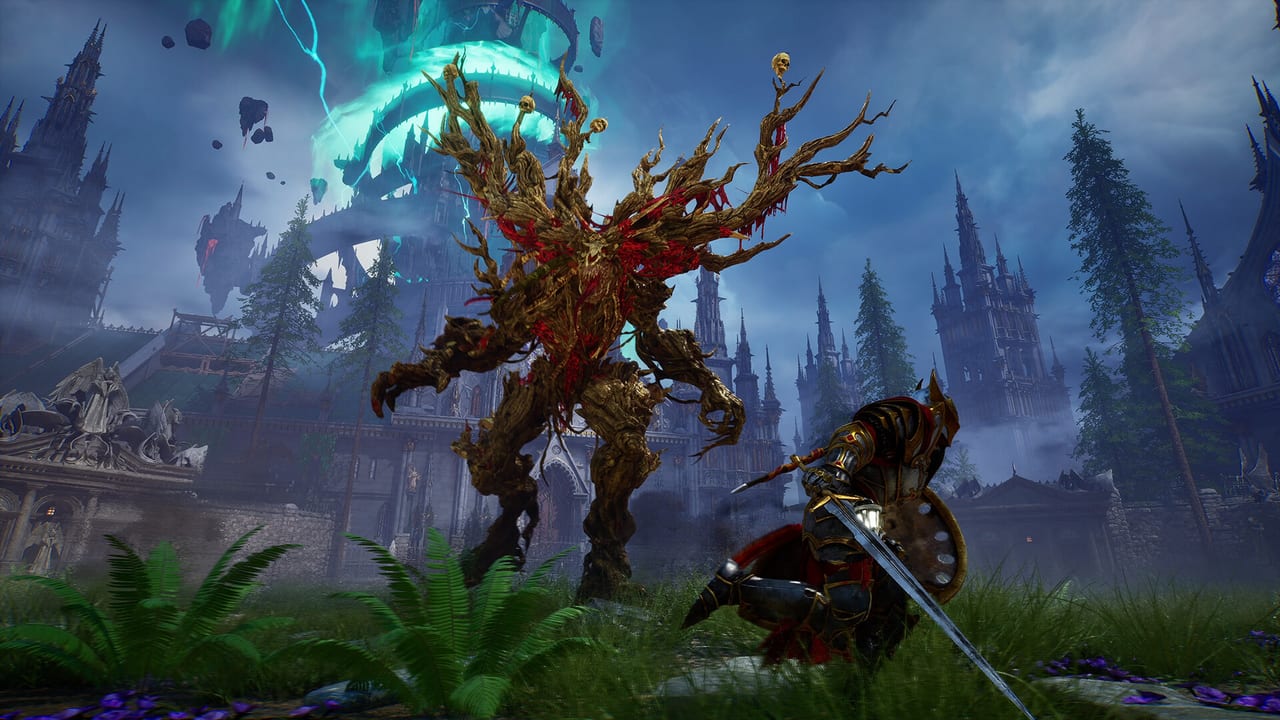
Crimson Moon’s pitch is a city, not a continent. Gildenarch was a holy jewel. It is now a gothic High Renaissance ruin eaten by demons, undead, vampires, and Hellgrowth. You are a Nephilim knight of the Order of the Crimson Moon, a hybrid forged to defend humanity. This page collects what official trailers, Steam copy, the February 2026 State of Play announcement, and preview interviews have actually said. It does not invent a novel. For how you play through the story, stay on getting started and the district list on enemies.
The opening charge
Trailer narration: you were born of forbidden blood, bound in chains to serve the Order, told to rise and send foes back to their fiery prison. Steam’s short description is the same fantasy without the poetry: annihilate demons, challenge brutal bosses, fulfill the prophecy. The player fantasy is holy violence, not a chosen-one speech in a tavern. Angels bleed. That line is the studio’s slogan for a reason.
You reclaim the city district by district. Each cleared ward pushes back the Legion’s Hellgrowth and unlocks new challenges. The structure is military as much as mythic. The Order is an occupying force trying to take a capital back from Hell, not a wandering party.
Gildenarch
Everything you have seen in screenshots is this city: cathedral naves, gargoyle halls, gaslit streets, red-banner skies, burning wards, swamp approaches, ritual floors. There is no second planet. Art directors at GDC 2026 cited Dungeons & Dragons campaigns and Michigan heavy-metal album art. The look is ornate religion colliding with viscera. When you walk Sanctus Clypeus, you are in the last building that still pretends the city has a government.
Named spaces already public through achievements and previews include Forsaken Streets, Archspire Cathedral, Ramshorn Keep, Shoreditch Prison, and Elk Grove Academy. Those names tell you the tone: civic, ecclesiastical, carceral, academic — all infested. Abraxas Stones of Rot, War, and Arcana are the trophies you pull from that geography. Collecting them is how the campaign admits you are winning.
The Order, the Church, and the Nephilim
Nephilim are half-human, half-angel. Knights of the Crimson Moon are the militant expression of that blood. The Lunatarian Church shares the hub and studies Eden’s forgotten history through Mereda’s work. The alliance is described as uneasy. Knights kill. Scholars archive. Hellgrowth does not fill out paperwork. Your Angel is both a gameplay transformation and a reminder that you are not fully human when you fight.
Eden appears as a lost history, not as a second map you visit in trailers. Mereda’s obsession is the breadcrumb. If later missions make Eden literal, this page will say so. Until then, treat it as the myth the Church is trying to reconstruct while you retake streets.
Infernal Legion, Hellgrowth, vampires, Dead Gods
The February announcement named the occupying force the Infernal Legion. Steam still lists the roster as demons, undead, vampires, and Hellgrowth abominations. Hellgrowth is the spreading corruption: red organic architecture that turns districts into meat. Vampires keep the gothic street-level threat. Undead fill the holy sites. Demons are the Legion’s muscle.
Culminating bosses are framed as Dead Gods. A specific antagonist named in PlayStation’s overview is Solomon Moore, a vampire lord described as the architect of Gildenarch’s demise. He is the face you can point at when someone asks who the villain is. World bosses at the end of a three-district streak are the mechanical version of that confrontation. Do not expect a full Solomon Moore walkthrough here before players can fight him.
How story is delivered in a mission game
Directors were clear that Crimson Moon is structured around focused, replayable missions rather than a traditional campaign ribbon. Story still exists: district reveals, hub dialogue, lore scrolls, and the prophecy the trailers keep invoking. You will not get a twenty-hour cutscene movie. You will get a city that remembers what you took back. That is why updates will matter after launch. New wards are narrative as well as content.
Metal musicians on boss tracks are part of the storytelling. HEALTH, Jared Dines, Misha Mansoor, and Ricky Armellino are not cameo stickers. Bosses are sermons with a backbeat. When a Dead God stands up, the game wants you to feel a ritual, not a health bar.
What to read next
If the setting sold you, look at enemies and bosses for the roster and district names, NPCs for the people who live in the Church, and characters for how Nephilim sit in the Order. If you came here to know whether the plot is finished at $19.99, the studio’s line is that this is a complete game with a later expansion attached to Deluxe, not a live-service roadmap. The prophecy, at launch, is meant to be fulfilled in Gildenarch.
Frequently Asked Questions
Quick answers before you enter Gildenarch.
Who is Solomon Moore?
PlayStation’s overview names him as the vampire lord who architected Gildenarch’s fall. He is the headline antagonist among a wider Dead Gods roster.
What is Hellgrowth?
The corrupting, spreading viscera that infests districts as the Infernal Legion occupies the city. Screenshots of Forsaken Streets show it eating streets and scaffolds.
Is there a full linear campaign?
Progress is district missions and Abraxas Stones, not a single overworld quest log. Lore still lands in the hub, in scrolls, and in boss framing. See getting started.
What is the Order of the Crimson Moon?
The militant order of Nephilim knights charged with reclaiming Gildenarch. They share Sanctus Clypeus with the Lunatarian Church.